Steven Hart
Knowledge Architect
I give meaningful structure to complex systems and data
Data-rich products often fail not at the interface, but in the structures beneath the surface: how information is organised, what relationships are made explicit (what the system is able to 'know') and in how that is all relayed to the user.
I work on the visible layer, to make products usable. But I also work at the layer below, to make sure the product is useful. I map objects, relationships and flows in a system, relate them to user goals, then define structures that make the whole system work as a tool for the user.
My work is foundational both for product strategy and for designing a detailed interaction framework: defining for the user what the product does and how it does it.

PEI Group: from document library to intelligence platform
PEI Group has valuable content and data, but interrogating it is laborious: a structural problem that UI doesn't fix.
I modelled an asset class as a knowledge graph in Neo4j to show how it could give new insights into the connected objects (investment firms, articles, data, people and events) of the PEI domain.
Then I designed page templates that showed how the new intelligence could be surfaced, and demo'd a design vision for the product to the senior leadership team.
This was a self-initiated proof of concept which won support from the Head of Design and Head of Data & AI at PEI Group.

Gatwick Airport
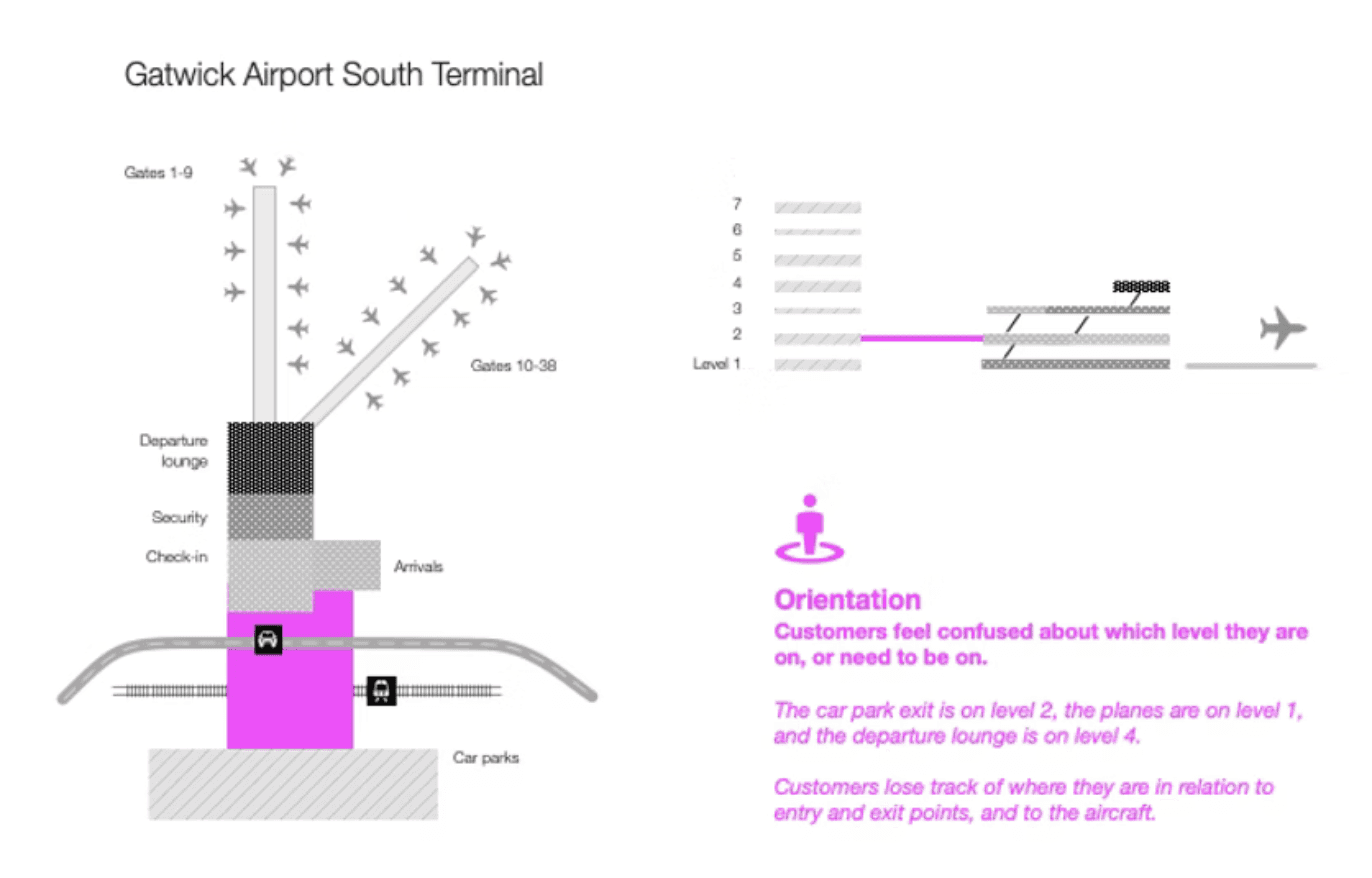
Airport websites appear complex because they expose every service equally: flights, parking, shopping, hotels, security, terminals.
Everything is presented as if it all matters equally at the same time, when really it doesn’t.
This work structured an online experience around a simple organising principle, relevant to all users of the airport: the flight number.

Barclays Bank Corporate Banking
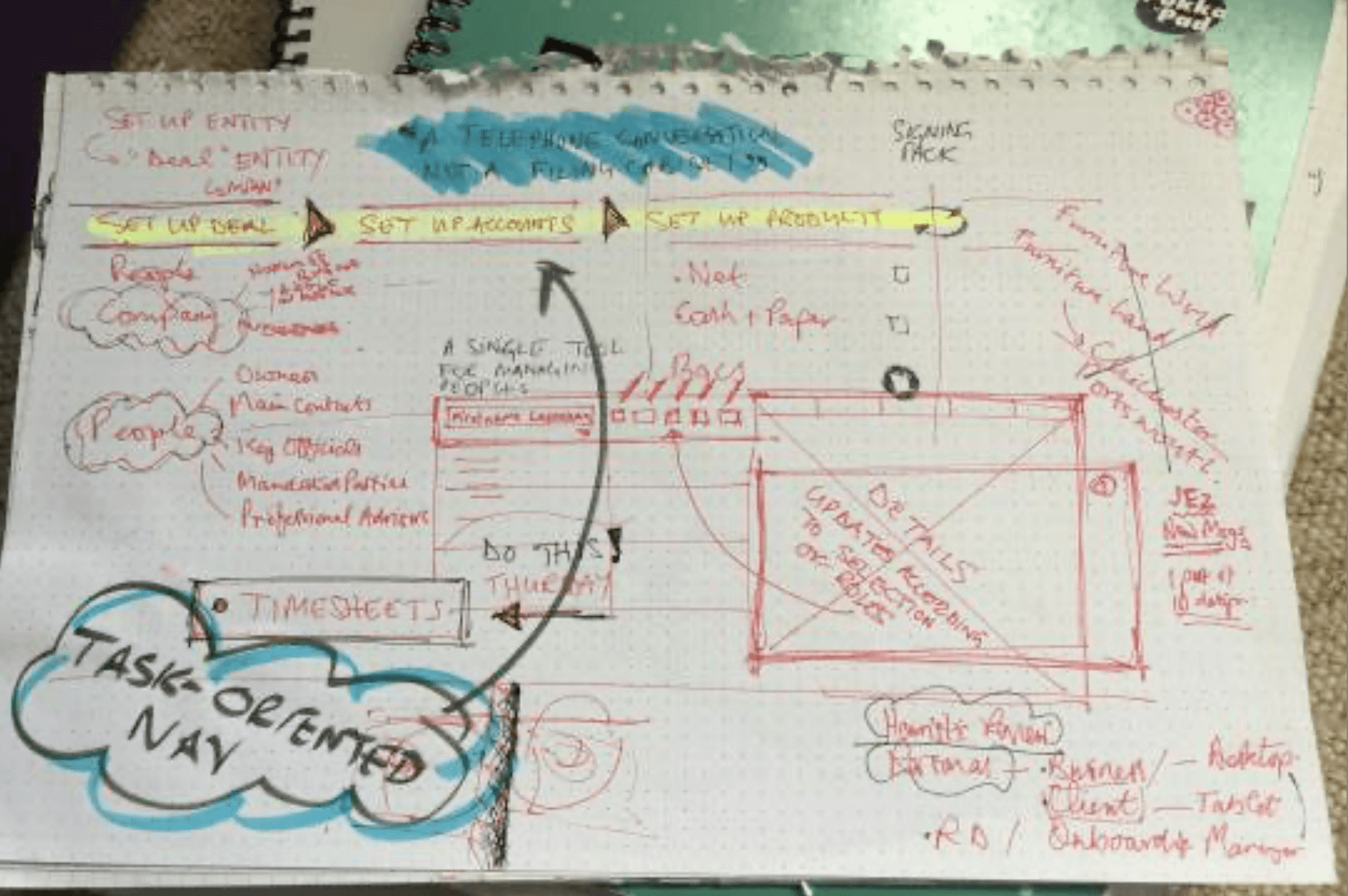
Redesigning corporate client onboarding at Barclays by working 'upstream' — mapping data flows and process dependencies before designing the interface.
Client: Barclays Design Office
Domain: Corporate Banking
Role: UX Lead
Outcome: Time to onboard reduced from months to weeks

Screwfix
Optimising the shopping experience of a large and complex catalogue by removing decision friction, without changing the underlying business systems.
Client: Screwfix HQ, Yeovil
Domain: E-commerce (30,000+ products)
Role: UX Lead (sole UX designer working with small team)
Outcome: Completed purchases up by ~20%
About me
I’m an information architect with over twenty years’ experience in UX and product design.
My focus is the layer beneath the interface: the structures that determine what a product can know, express, and do, and the design foundations for products and platforms that sit over those structures.
That means working with domain models, taxonomies, knowledge graphs, and the controlled vocabularies that make complex information coherent at scale and easy to design effective frameworks around.
What I do
Product strategy and vision
UX architecture; interaction design
Structure content and navigation for complex systems
Design taxonomies and controlled vocabularies
Model domain concepts and relationships
Align data structures with real user goals (or vice-versa)
Define interactions that make complex systems usable
How I work
I start by understanding how a domain works, mapping the key concepts and objects, how they relate, and how they generate meaning for users.
From there, I define structures that support both user understanding and platform capability.
A note on AI
AI systems are only as effective as the structure of the information they operate on.
When content and data are organised around clearly defined entities and relationships, both people and AI systems can retrieve more accurate information, generate more reliable outputs and surface patterns that would otherwise remain hidden.
This makes information architecture a critical part of building useful, trustworthy AI-driven products.

Steven Hart
Knowledge Architect